
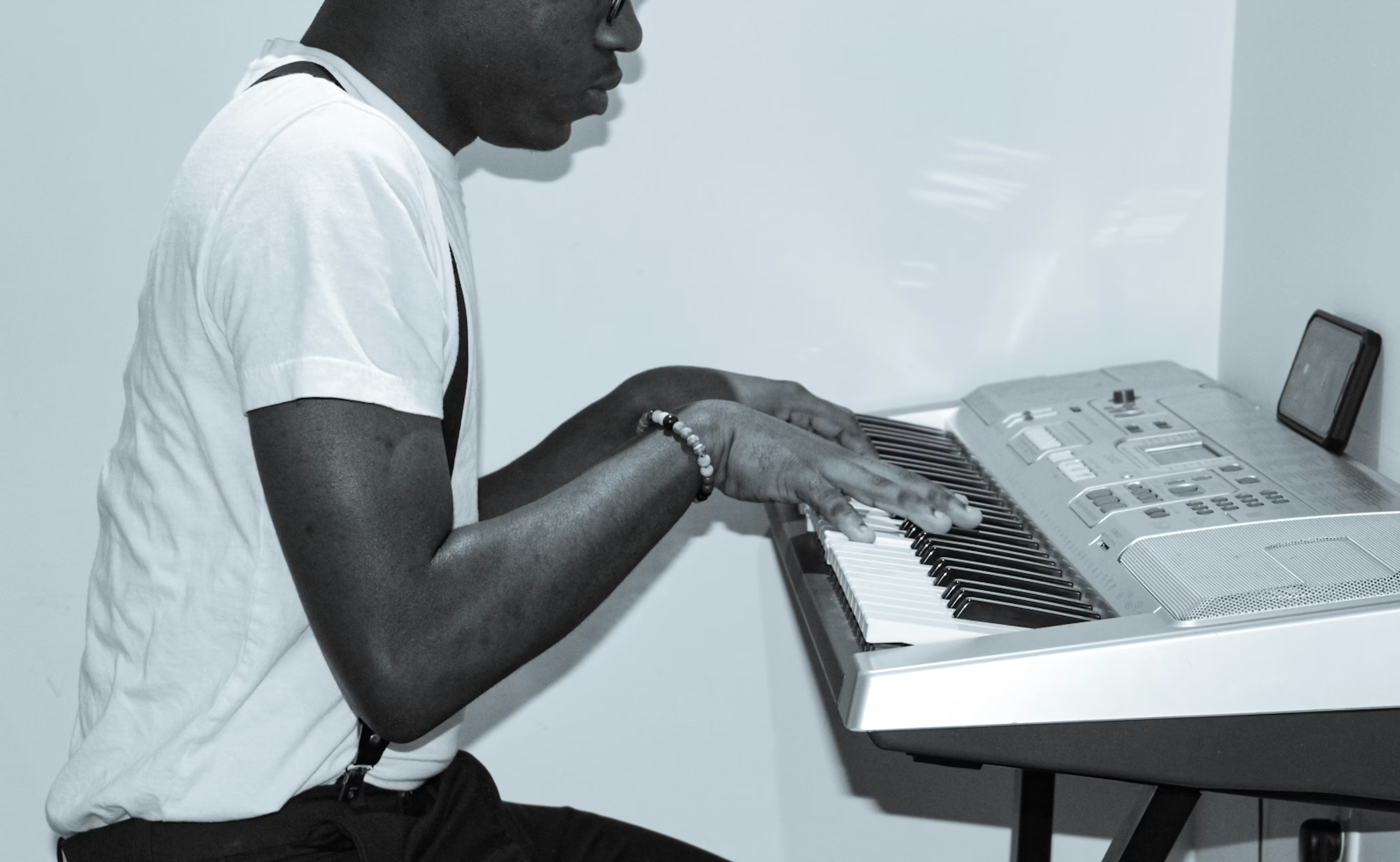
When I first tried to learn piano by myself, I did what a lot of people do: I opened YouTube, found a few Synthesia-style tutorials, and followed the falling notes like my life depended on it. It was a fun way to start, and it helped me play a few songs, but it was not enough to really become a good pianist.
What took me a while to understand is that learning piano is not just about getting through songs. If you want to teach yourself well, you have to build the skills behind the songs too.
Start with the basics, not just the fun parts
I know this is not the most thrilling sentence in the world, but learning piano gets much easier once you spend some time on the foundations.
The things that helped me most were:
- learning the note names on the keyboard
- understanding basic rhythm
- practicing major and minor chords
- getting familiar with simple scales
- learning a bit of basic theory, especially intervals and chord building
None of this has to be super academic. But if you understand chords, scales, and how notes relate to each other, everything starts making more sense.
That is why I think beginner books are still useful, especially if you are teaching yourself. A few good options are Alfred’s Basic Adult All-in-One Course, Adult Piano Adventures, and Hal Leonard Adult Piano Method. You only need one.
Posture matters more than people think
This is the part beginners often ignore because it feels less urgent than learning songs. I ignored it too, and that was not smart.
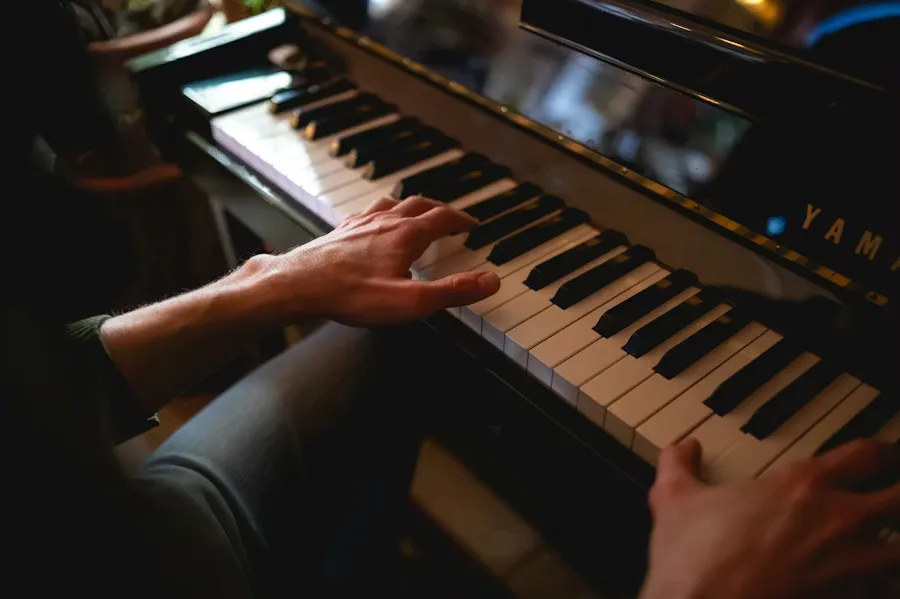
Good posture and hand position are important for control, but they are also important for your health. If you play with a lot of tension, collapsed wrists, or awkward finger positions, you can put unnecessary strain on your hands, wrists, and tendons.
What helped me was keeping a few simple things in mind:
- sit high enough that your forearms feel level with the keyboard
- keep your shoulders relaxed
- avoid dropping your wrists too low
- let your fingers stay naturally curved
- stop if you feel pain instead of trying to push through it
If you are learning alone, I really think it is worth watching a few YouTube videos from piano teachers about posture and hand position. This is one of those topics where seeing it explained visually helps a lot. And honestly, your future tendons will probably appreciate the effort.
Practice skills, not only full songs
One thing that changed my progress was splitting practice into smaller parts instead of just repeating the same piece from the beginning every time.
A simple self-taught practice session can include:
- a few minutes of scales or arpeggios
- chord practice
- basic theory review
- a short reading exercise
- one piece you are currently learning
This kind of routine helped me improve faster because I was building actual piano skills, not just trying to memorize where my fingers should go.
The elephant in the room: reading sheet music
This is where a lot of people get stuck. Sheet music can feel painfully slow at first. You look at the staff, then at your hands, then back at the staff, and somehow forget what planet you are on.
Still, I do think learning to read sheet music matters if you want long-term freedom at the piano. If you only learn through visual tutorials, you may learn a few songs quickly, but every new piece sends you back to the internet to start over.
The good news is that there are plenty of apps now that try to make sheet music easier to learn. I think that is a really helpful step for beginners, because staring at a page of notes with no support is not exactly a great confidence boost. Among all the piano apps, SunScore is my favorite one.
What I like about SunScore is that it lets me upload my own sheet music and practice with both the real notation and visual guidance at the same time, so I can learn songs in a way that feels approachable without giving up on actually learning to read music. That flexibility is what makes it stand out to me, especially compared with apps that lock you into a fixed library or a single learning method.
My honest advice if you are learning alone
If you want to learn piano by yourself, I think the best plan is pretty simple:
- learn the basics well
- take posture seriously
- practice chords, scales, and simple theory
- use a method book for structure
- do not avoid sheet music forever
- use tools that make reading music easier instead of more stressful